Cairo, Cuba, and Cocktails
The improbable life of Joe Scialom, who built some of the twentieth century's great hotel bars and was driven out of nearly all of them.
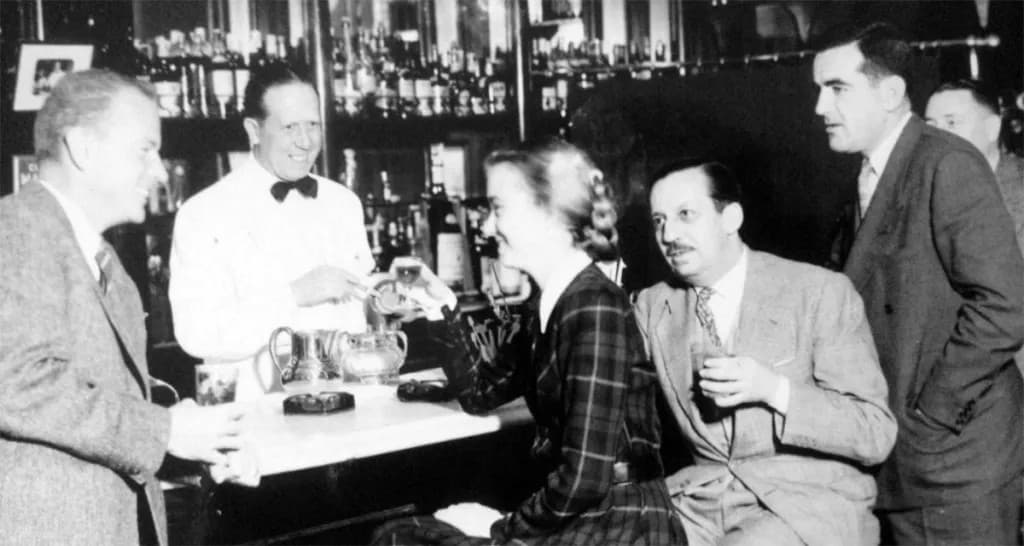
There was a time when the world’s great hotel bars were more than places to order a drink. They were embassies, newsrooms, confessionals, often all at once, in the same room on the same evening. If you wanted to understand a city, you started with its grand hotel.
For more than a century, Shepheard’s Hotel in Cairo stood as the drawing room of the Eastern Mediterranean. Beneath its Moorish ceilings and out across its famous terrace, generations of travelers arrived convinced they were passing through history. Winston Churchill drank there. So did T. E. Lawrence. Generals, journalists, and diplomats all found themselves at the Long Bar sooner or later.
Behind that bar stood Joe Scialom.
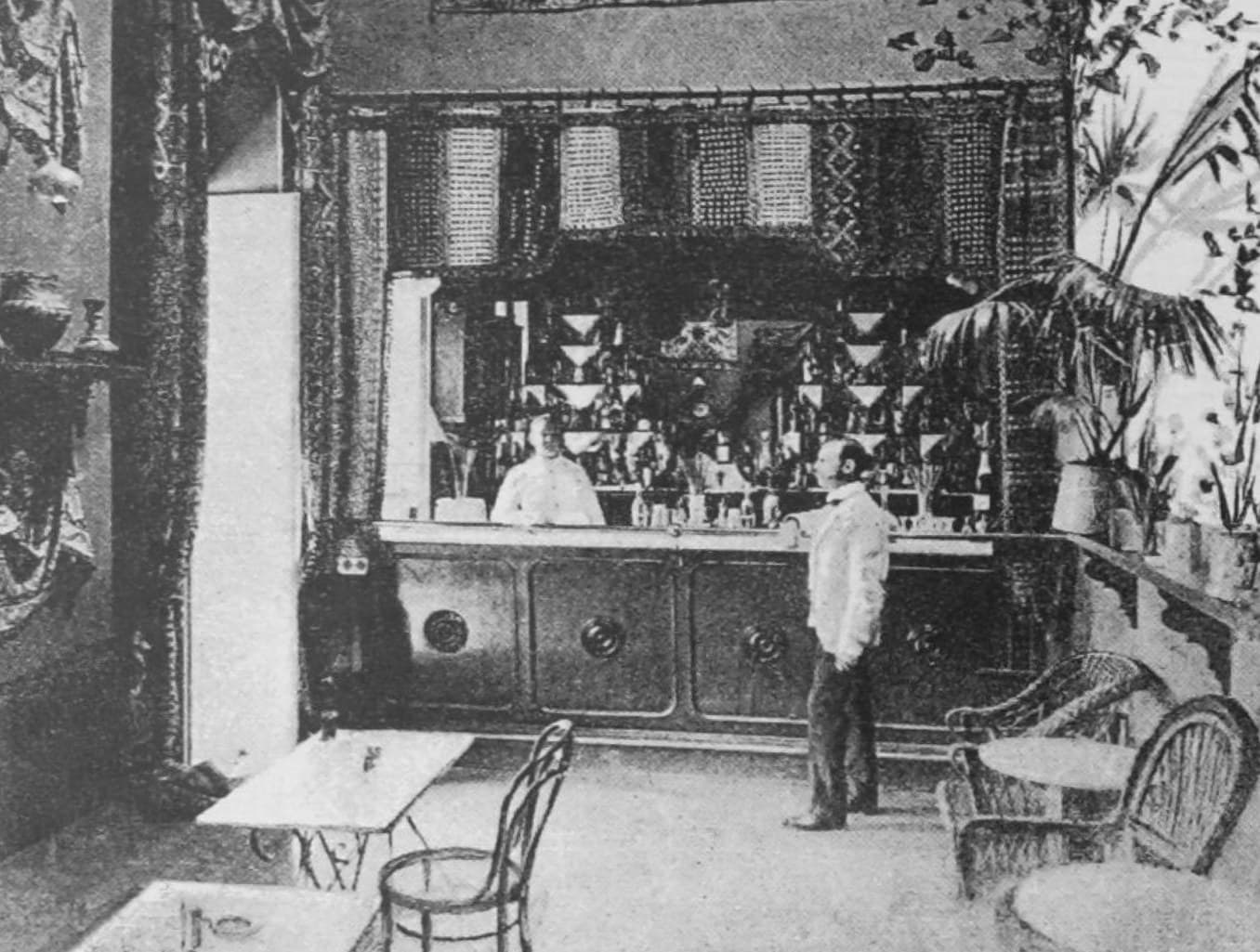
He liked people to call him simply “Joe the Bartender,” as though there was nothing remarkable about him. Yet few bartenders, or few people at all, have lived a life so entangled with some of the greatest history of the twentieth century. Born in Egypt to an Italian Sephardic father and a Russian Jewish mother, educated in France as a chemist, and fluent in eight languages, Joe met every crisis with the same composure he brought to a crowded bar. Cairo. San Juan. Havana. New York. Each move carried him to another legendary hotel, and almost every one would eventually disappear, be seized, or be transformed beyond recognition.
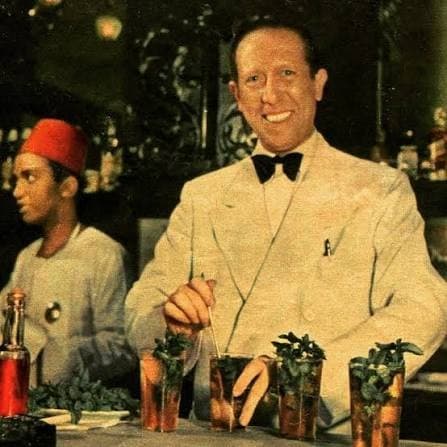
He once described the bartender as part diplomat, part confessor, part financial adviser, and part storyteller. That philosophy explained why he remembered guests years after a single meeting, why correspondents claimed he held the Long Bar together during the Second World War, and why Conrad Hilton would later trust him with some of the most important hotel bars in his growing international empire.
Joe had never intended to become a bartender. His father owned a pharmacy in Cairo and expected his eldest son to inherit it. Joe was sent to France to study chemistry, then worked briefly for a British pharmaceutical company in Sudan. The science interested him. The medicine did not.
“I didn’t like mixing poisons,” he later joked. “I always wanted to mix something that would make people cheerful.”
Back in Cairo, he found exactly that opportunity at Shepheard’s Hotel. When he inherited the Long Bar in 1940, Europe was already at war, and Egypt would soon become one of its most unlikely stages.
As Field Marshal Erwin Rommel pushed east across North Africa, Cairo became the headquarters of Allied planning. British officers crowded into the Long Bar alongside war correspondents and diplomats. Chester Morrison of Look magazine would later call it “the best press club of all time,” writing that it was Joe who somehow kept the room together, effortlessly shifting between languages, smoothing disagreements and making every guest feel as though they belonged there.
As Rommel’s advance disrupted supply lines into Egypt, Shepheard’s was left with dwindling stocks of imported spirits. Officers complained that the substitutes left them with spectacular hangovers. Joe approached the problem the way a chemist would. Equal parts gin and brandy. Lime cordial. Angostura bitters. Ginger beer. The result was refreshing, restorative, and by Joe’s account slow to show its full effect.
He called it the Suffering Bastard.
Its reputation spread almost immediately. During the Battle of El Alamein, an urgent request reportedly arrived from British officers asking for several gallons to be sent to the front. Joe filled every thermos he could find and dispatched them west by taxi across the Egyptian desert.
The war ended. Shepheard’s survived.
Peace proved less forgiving.
In January 1952, riots swept through Cairo and Shepheard’s burned to the ground. Joe rebuilt his life and stayed. Four years later, during the Suez Crisis, he was arrested on suspicion of espionage. The accusation was almost understandable. A man who was fluent in eight languages and counted generals, ambassadors and journalists among his regular guests looked suspicious to a government searching for spies.
After nearly a month in prison, he and his family were expelled from Egypt. They left behind their apartment overlooking the Nile, their furniture, their savings and almost everything they owned. According to his daughter, interviewed years later by the cocktail historian Jeff “Beachbum” Berry, Joe was allowed to take little more than his white bartender’s jacket.
Exile might have ended another career.
Instead, it began Joe’s second act.
Exile might have ended another career. Instead, it began Joe's second act.
Conrad Hilton was building his hotel empire at speed, and the Caribbean was its leading edge. He needed someone who could give his properties true character: the drinks, the atmosphere, a sense of place. He had found such a man in Cairo years before and had never forgotten him. In 1956, with Joe freshly expelled from Egypt and out of work, Hilton brought him to San Juan to run the bars at the Caribe Hilton.
It was already a hotel that took its drinks seriously. A local bartender named Ramón Marrero had recently blended rum, pineapple, and a new product called cream of coconut into the Piña Colada, a drink that would become the most famous ever poured at the Caribe and, in time, the national cocktail of Puerto Rico. Over that bar program Hilton placed Joe, to run it and raise the whole operation to the level of his ambitions for the property.
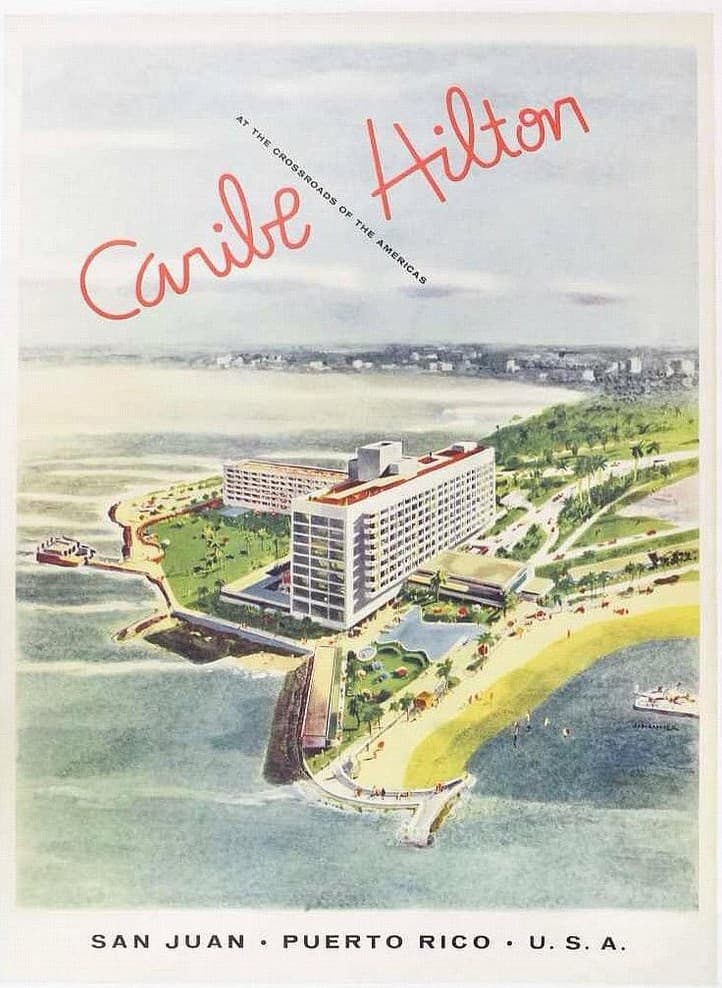
Joe embraced the island immediately, its rum, its fruit, its flavors, and began building drinks unlike anything he had made before: the Tropical Itch served in a hurricane lamp, the Coucou Comber in a hollowed cucumber, the Sol y Sombra in a cored baby pineapple. These were not simple drinks. Joe built them like a chemist, layering rums, juices, and liqueurs into combinations no one had tried, then dressed them for the stage: oversized vessels, carved fruit, a backscratcher laid across the rim of the Tropical Itch as a swizzle stick. The effect was both technical and theatrical, drinks engineered to be photographed and talked about. They gave the Caribar its reputation and legend Conrad was looking for.
San Juan was a triumph, and Hilton had bigger plans. In 1958 he opened the Habana Hilton, the largest hotel in Latin America and the new flagship of his empire, thirty stories above Havana; the most dazzling city in the hemisphere, where American movie stars, money, and music poured in by the planeload and the nightlife ran until dawn. He wanted his best man behind its bars, and so Joe was sent on to Havana, the most glamorous posting of his career and, as it turned out, the shortest.
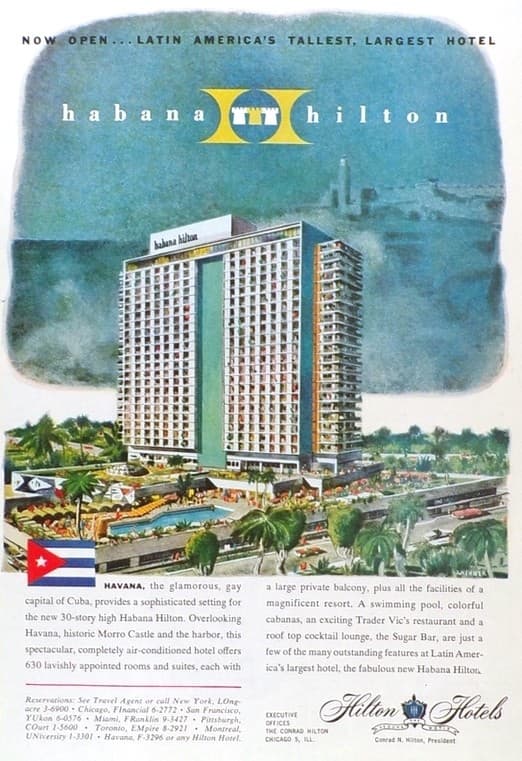
Joe opened the Habana Hilton’s bars at full tilt, inventing for the new flagship the way he had in San Juan: a rum-and-guava drink he called the Machete, and the Fantasia, a tropical take on the brandy milk punch and a structural cousin of the Piña Colada, built for Cuba. The hotel was barely a year old when, on the first day of 1959, Castro’s fighters came down out of the hills and into the city, and within weeks they had taken the building itself, turning the grandest address in Cuba into a revolutionary headquarters. By 1960 the hotel had a new name, the Habana Libre, and Joe had no job, no country, and a suitcase packed for the second time in three years. He had fled one revolution in Cairo and walked directly into another.
He had fled one revolution in Cairo and walked directly into another.
After Havana, Joe stopped belonging to any one hotel. Hilton made him a traveling envoy, dispatched wherever a new bar needed opening or a famous one needed reviving: New York, Rome, London, Paris, a new city every year or two.
Joe didn’t just work in the great hotel bars. He helped invent what they could be. His cocktails traveled with him and changed their names at the border. The Suffering Bastard became the Egyptian 75 in Manhattan; a San Juan rum punch resurfaced in Berlin as Pirate’s Delight. Guests rarely knew they were drinking something first imagined in Cairo or San Juan. They only knew it felt at home wherever Joe was standing.
Joe retired to Florida in 1977. He was coaxed back behind the bar only once, near the top of the World Trade Center, where a new restaurant called Windows on the World wanted a host who could still work a room in eight languages. It was the last great act of his career, and fittingly the highest one in the world.
Twenty-five years later, from a nursing home television, he watched smoke pour from the very same tower. The bar disappeared much as the first had, consumed by forces far larger than itself, four decades and an ocean from the Cairo riot that burned Shepheard’s down.
Joe Scialom died in 2004, his name already faded from public memory, and much of his profession with it.
Luxury hotels still build beautiful bars, but the old international hotel bartender has become a rarity: someone who could defuse an argument in one language and propose a toast in another, and make a stranger feel, by the second evening, like a regular of twenty years.
Joe invented more than two hundred cocktails, most of them now forgotten. But perhaps his better legacy is what he understood: that a bartender’s real work has little to do with alcohol at all.