A cocktail older than the Derby, and still poured the way it always has been.
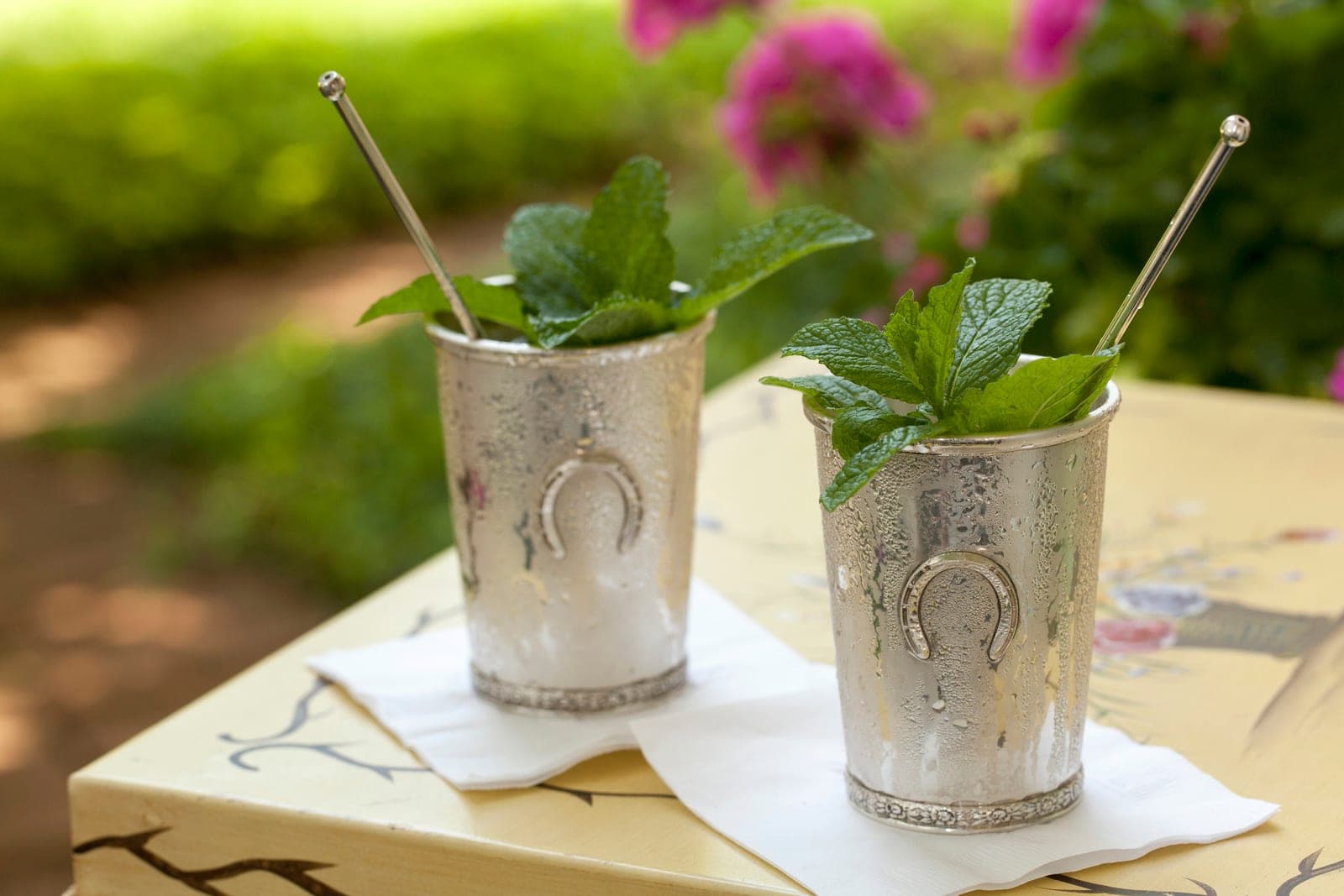
On the first Saturday in May at Churchill Downs, one cocktail is responsible for over 125,000 orders in a single afternoon. A cocktail older than the race itself.
In 1937, U.S. Army general Simon Bolivar Buckner Jr. wrote, “A mint julep is not the product of a formula… It is a ceremony.” The julep is one of the few American cocktails that exist beyond just a recipe, but as a ritual.
The word julep comes from the Persian gulâb, meaning rosewater, by way of Arabic and Spanish. In its earliest English form it was medicine, a sweetened vehicle for bitter tinctures. It crossed to colonial America in the 1700s and arrived in the South somewhere in the bourbon-adjacent middle of its evolution. By 1793, when a Reverend Harry Toulmin described one in writing, it was already, in his words, “a tumbler of rum and water, well sweetened, with a slip of mint in it.”
Rum then, because bourbon hadn't yet won the country. Henry Clay, the Kentucky senator, gets credit for cementing bourbon as the proper base. He carried the julep into Washington society in 1830 and introduced it at the Round Robin Bar of the Willard Hotel, which keeps the drink on its menu to this day. By the 1820s, silver julep cups were already being awarded as trophies at Kentucky racetracks. The connection between this drink and horse racing was established decades before the Kentucky Derby ran for the first time in 1875.
The julep became Derby's official drink in 1938, the year after Churchill Downs started selling souvenir cups. The official bourbon has changed hands a few times including Early Times, Old Forester and Woodford Reserve. All make a great mint julep.
What makes the julep actually work is the fact that it engages all the senses at once. Mint in your nose, bourbon in your mouth, and cold metal on your face and hands, all at the same moment. James Beard called it the most elegant drink in the world. F. Scott Fitzgerald put it in The Great Gatsby as a marker of summer decadence. Faulkner, by all accounts, drank one nearly every afternoon.
The recipe is four ingredients and two rules.
Spearmint, not peppermint. Kentucky specifies spearmint and Kentucky is right. Bourbon, ninety proof or above. Simple syrup at a one-to-one ratio (water to sugar). Crushed ice, not cubes, and this is a hard rule. Cubes do not frost the cup the same way and do not dilute the bourbon at the same rate. You can make a passable julep with the wrong glass and the wrong bourbon, but you cannot make one with the wrong ice.
The first rule: muddle lightly. You want the oils, not the pulp. A bruised mint leaf releases its scent. A shredded one releases bitterness. The second rule: stir until the cup frosts, then stop. Not before, not after.
Top with more crushed ice to form a dome above the rim. Garnish with a generous sprig of mint, slapped once between the palms to wake it up. Serve with a short straw, short enough that the drinker's nose is in the mint as they sip.
Where to drink a classic mint julep
The Brown Hotel Lobby Bar (335 W. Broadway) is the city's traditional julep destination, the room where locals and visitors have been drinking the cocktail since 1923. The Brown is the city's grand dame, the Lobby Bar is oak-paneled and quietly excellent, and the julep is poured to specification without commentary. If you are choosing only one room for a julep on a single trip, this is the one to choose.
The Old Seelbach Bar (Seelbach Hilton, 500 S. Fourth St.) is the historical room, dark mahogany, brass fittings, century-old, and the kind of place that has been pouring juleps long enough that it would be strange to drink them anywhere else when you are in the neighborhood. The bartenders make the drink correctly: silver cup, crushed ice, a proper bourbon, the dome on top, the straw cut short. Order one before dinner, hold it by the rim, and sit with it for a few minutes before you sip. The frost has to form. The julep does not reward speed.
Churchill Downs (700 Central Ave.) is the home address of the drink, and you can drink one there year-round, not only on Derby weekend. The Derby Café & Bourbon Bar, inside the Kentucky Derby Museum on the property at 704 Central Avenue, is open Monday through Saturday and pours the classic julep alongside more than a hundred and seventy bourbons. Museum admission gets you in, but the bar is the point. Order one, walk out to the rail of the most famous racetrack in America, and drink it looking at the Twin Spires.
On Derby weekend, the same address transforms. Twenty-two-and-a-half thousand pounds of mint and four hundred seventy-five thousand pounds of ice move through Churchill Downs over the Oaks-and-Derby two days, and the julep that gets poured is more ritual than cocktail. Both versions of this place are worth the trip. The year-round version is what most readers will actually drink, and it is the one that does the most to anchor this drink to its home.
If the trip is on the calendar, drink one at one of these establishments above. If it's not, enjoy your own version at home. This legendary cocktail can exist anywhere as long as you honor the recipe.